

Hydrogen storage
A hydrogen storage system converts surplus solar electricity into hydrogen through electrolysis and stores it for weeks or months. In winter, when the photovoltaic system produces less, a fuel cell converts the hydrogen back into electricity and heat. The result is significantly greater self-sufficiency than with a conventional battery alone.
Conversio Energie provides advice, planning and installation of hydrogen storage systems for detached houses, apartment buildings and businesses throughout Austria.
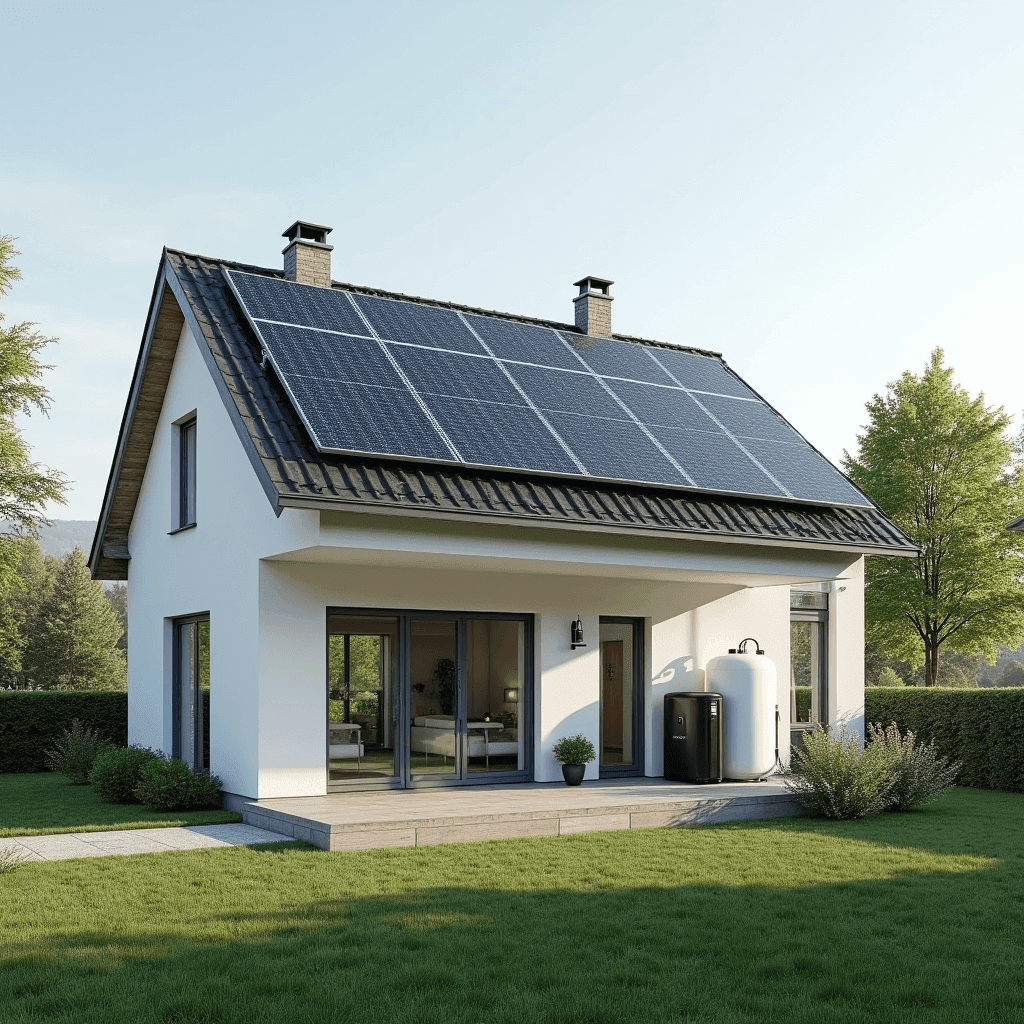
How does hydrogen storage work?
The system consists of three main components working in a closed loop:
Electrolyser
Uses solar electricity to split water (H₂O) into hydrogen (H₂) and oxygen (O₂). The hydrogen is compressed and stored in a tank. The process starts automatically as soon as surplus electricity is available.
Storage tank
Hydrogen is stored in pressure vessels, typically at 30 to 300 bar. Unlike a battery, hydrogen storage does not lose charge over time. The stored energy is retained in full for weeks and months.
Fuel cell
Converts the stored hydrogen back into electricity and heat when needed. The waste heat can be used directly for domestic hot water or to support space heating.

Hydrogen storage or battery storage?
Both systems store solar electricity, but for different periods and purposes.
| Feature | Battery storage | Hydrogen storage |
|---|---|---|
| Storage duration | Hours to a few days | Weeks to months (seasonal storage) |
| Efficiency | Approx. 85–95% | Approx. 30–40% (electrolysis + fuel cell) |
| Strength | Daily balancing: mornings/evenings | Seasonal balancing: summer to winter |
| Waste heat | Minimal | Usable heat for heating and hot water |
| Self-discharge | Yes, approx. 2–5% per month | No |
| Ideal combination | PV + battery for everyday use | PV + battery + hydrogen for maximum self-sufficiency |
In practice, the two systems complement each other: the battery covers daily demand, while hydrogen storage bridges the months with little sunshine. Conversio plans both components as an integrated system, tailored to your consumption and installation.
Who is hydrogen storage suitable for?
Detached houses with a photovoltaic system
Hydrogen storage is particularly useful if you want the highest possible level of self-sufficiency throughout the year. Typical systems for detached houses store summer surpluses and provide an additional 500 to 1,500 kWh in winter. Combined with a battery, self-sufficiency rates of over 80% are realistic.
Apartment buildings and energy communities
Larger residential buildings and energy communities benefit from greater economies of scale. Investment costs per stored kWh decrease as system size increases. Within an energy community, the stored hydrogen can be made available to several participants.
Businesses
Businesses with high electricity consumption and their own PV system can use hydrogen storage for long-term storage and backup power. The fuel cell supplies uninterrupted electricity during grid outages.
Costs and consultation
The cost of a hydrogen storage system depends on several factors: the required storage capacity, the electrolyser type, the fuel cell and the structural conditions on site. A general price estimate would therefore be unreliable.
After analysing your consumption and visiting the site, Conversio prepares an individual cost estimate for your project. The consultation is free and without obligation.
Interested in hydrogen storage?
Get advice from our experts without obligation and request a tailored cost estimate for your property.
Request a free quoteFrequently asked questions
How much does hydrogen storage cost for a detached house?
Costs depend on the required storage capacity, the components selected and the structural conditions. After analysing your consumption and visiting the site, Conversio prepares an individual cost estimate. The consultation is free and without obligation.
Do I also need battery storage?
Yes, in most cases. Battery storage covers daily needs in the morning and evening, while hydrogen storage handles seasonal storage from summer to winter. The two systems complement each other. Conversio plans both components as a coordinated, integrated system.
Is hydrogen storage safe?
Modern domestic hydrogen storage systems are certified for safe operation in residential buildings. Storage tanks are pressure-tested, and the systems feature automatic leak detection and emergency shutdown. They are typically installed in a basement, garage or separate ventilated plant room.
Can I add hydrogen storage to my existing PV system?
In principle, yes. The prerequisite is a sufficiently large PV system that regularly produces surplus electricity in summer. Conversio checks whether the existing system and inverter are compatible and plans the integration into the overall system.