

Energy communities – what are they?
Energy communities are a new way of sharing energy (electricity, gas, and heat) that brings production and consumption closer together. This creates economic, ecological, and social benefits for both producers (PV system owners) and consumers.
Energy communities – unleashing energy together
They operate according to the motto: produce, store, consume, and sell energy together. Multiple participants join together into a group, participating for various reasons.
The smallest setup or minimum number of participants is two, for example a two-family house. On the roof, a photovoltaic system produces its own electricity. The system belongs to the son living on the top floor, and he also makes the generated energy available to his parents living on the ground floor. Neighbors can also be included. The community independently decides the financial terms of this energy exchange. There is virtually no limit to the number of participants.
They do not have to live in the same house, apartment block, or region. If family members or friends are spread across Austria—which happens often due to jobs, university studies, or personal relationships—they can also form an energy community.
Participants who join an energy community network enjoy many advantages. They benefit from greater independence from large energy suppliers, while also reaping ecological, economic, and community benefits. They strengthen local and regional value creation by investing in renewable generation facilities, as well as their expansion and maintenance. Naturally, this also helps collectively improve the regional eco-balance and reduce individual carbon footprints.
What requirements must participants meet?
The following requirements apply to all applicable models: every participant must have a connection to the public grid and a smart meter with 15-minute interval data transmission.
There are various models of energy communities.
Joint generation system (GEA)
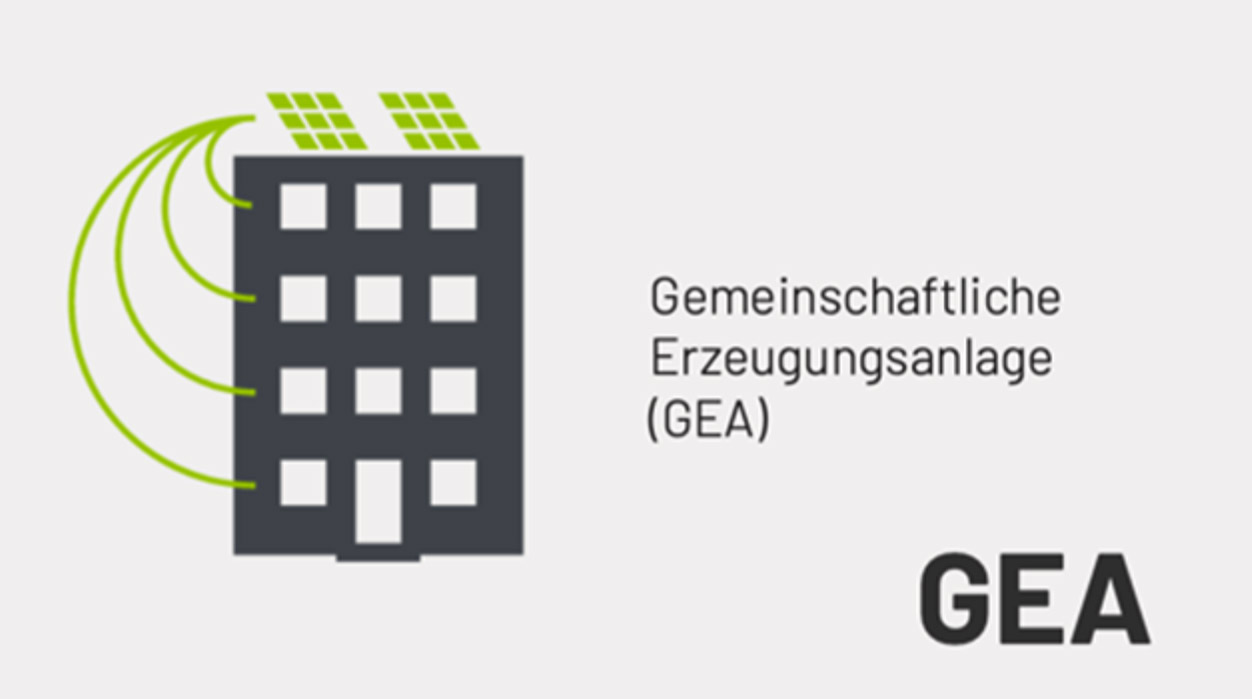
A joint generation system can be used by multiple participants (residents, tenants). This increases the self-consumption share and the economic efficiency of the facility. Appointing an operator for the GEA is a minimum requirement for implementation.
Who can participate:
Anyone connected to the same main riser or supply line as the generation system can, but does not have to, participate. The public grid is not used for direct energy exchange.
Advantages:
The energy price is customizable, offers tax advantages, and provides a 100% savings on grid usage fees compared to drawing from the public grid, as generation and consumption occur at the same location.
Renewable energy community (EEG)
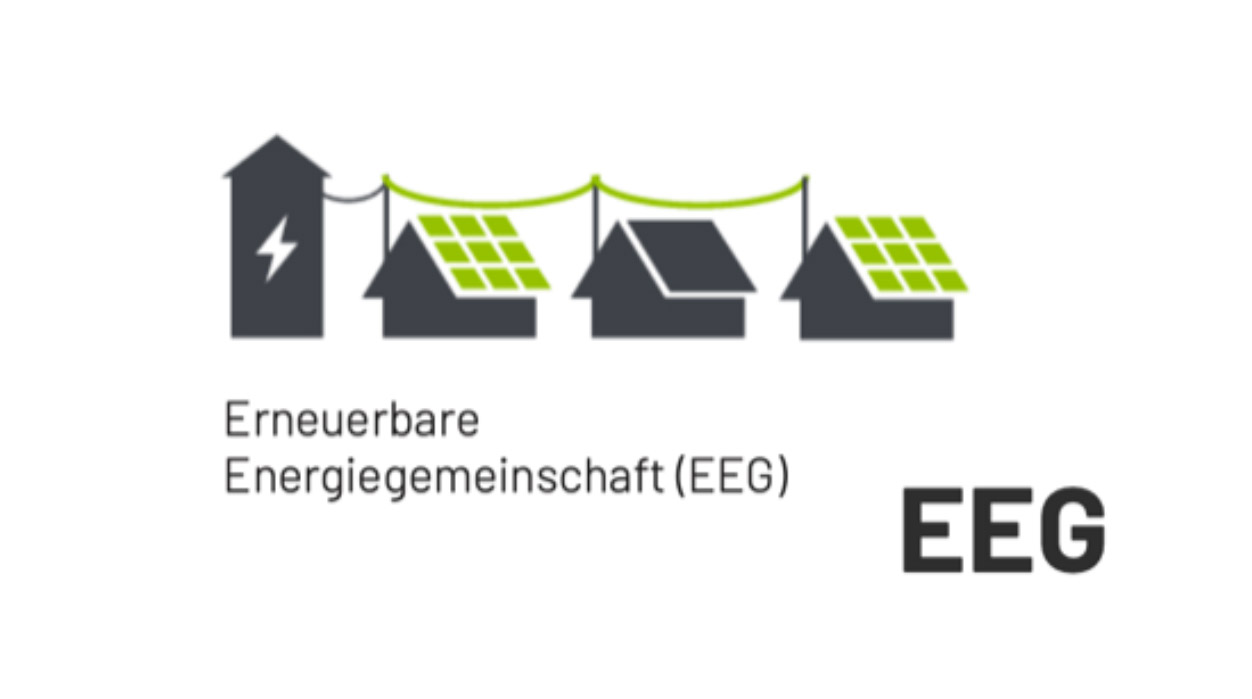
In a renewable energy community, producers and consumers (or prosumers) join forces. A minimum of two participants can produce and consume energy together. In addition to renewable electricity, this model applies to other renewable energy sources such as heat or gas. A separate legal entity must be set up for the community (e.g., an association, cooperative, or limited liability company).
Who can participate:
All private individuals, legal entities, municipalities, local authorities, as well as small and medium-sized enterprises located within the same concession area of a grid operator. All participants must be located within the same local area of the generation facilities.
Local EEGs must be connected to the same local transformer station.
Regional EEGs can extend up to the main substation.
Advantages
The energy price is customizable, the "Renewable Energy Support Contribution" fee is waived, and the electricity tax can be reclaimed. Furthermore, grid usage fees are reduced: by 57% for local EEGs and typically by 28% for regional EEGs. Additionally, you actively contribute to relieving regional grids, which positively affects overall grid stability.
Citizens' energy community (BEG)
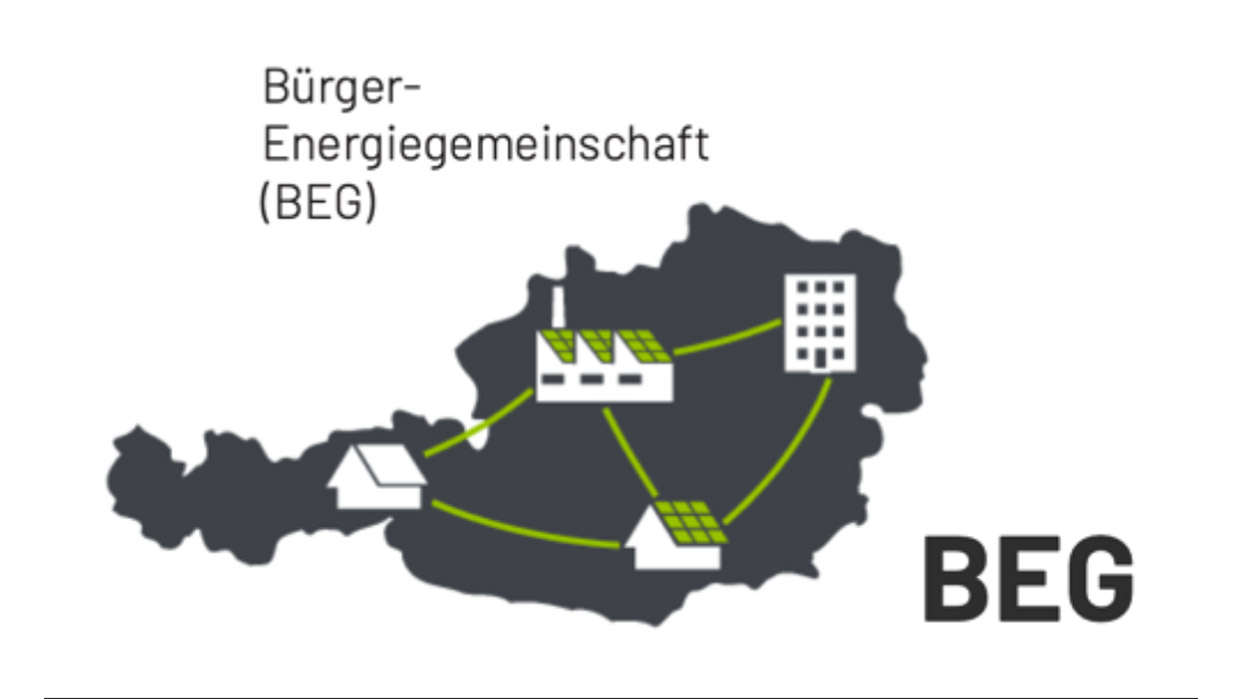
Share and use energy with others across Austria while benefiting from individual pricing and tariff models. This is also open to large enterprises. Citizens' energy communities are restricted to electrical energy.
Anyone (private individuals, companies, including large enterprises and electricity companies) can participate, regardless of where they are located across different grid operator concession areas in Austria.
Advantages:
The energy price is customizable. It enables the integration of large generation capacities and applies nationwide across Austria while still boosting local value creation.
What happens to my current contract if I join an energy community?
Contracts with existing energy suppliers and surplus feed-in buyers remain completely unchanged, and you retain full freedom of supplier choice in the future. Once the energy produced within the community is used up, you remain fully covered by your usual power supply without any interruption.
Conclusion
As you can see, there are several ways to actively participate in different types of energy communities. This allows you to support yourself or a group while benefiting from lower energy prices and greater independence from major energy corporations.
We strongly recommend seeking expert support when joining or founding your own energy community. Contact a specialised service provider such as Flexum GmbH (www.flexum.at/energiegemeinschaften) based in Vienna to find out more. Further information on energy communities is also available at https://energiegemeinschaften.gv.at/ the official Austrian coordination office for energy communities.
Start building future-proof, energy-rich, and unleashed partnerships through energy communities today.
04.10.2023